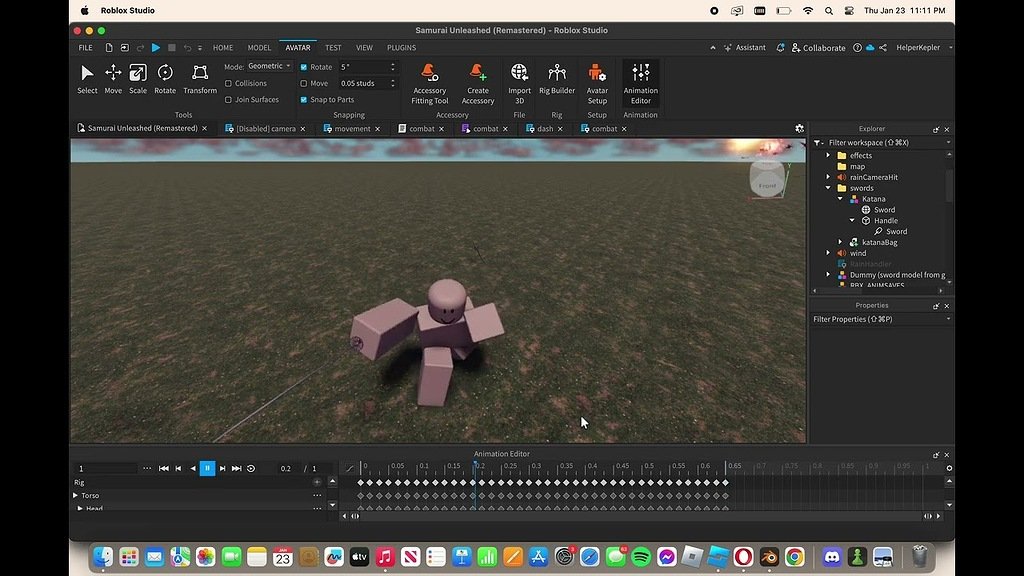
When you watch a master swordsman in a film or a game, it's not just the blade that sells the strike—it's the visible effort, the undeniable impact, and the lingering consequences. Mastering Animating Sword Combat & Action Sequences means creating that illusion of weight, danger, and tangible interaction. It’s about making a digital sword feel like it could actually cleave through armor or deflect a powerful blow, grounding your fantasy in believable physics and compelling character performance.
It’s a tricky balance: how do you infuse a choreographed dance with the visceral reality of a desperate struggle? How do you make a character feel like they're truly hitting something, rather than just swinging through air? This guide will show you how to imbue your animations with the kind of impact that resonates, from the precise timing of a parry to the devastating force of a finishing blow.
At a Glance: Your Blueprint for Brutal Blade Work
- Plan, Don't Just Pounce: Start with strong references, understand your weapon's physics, and define your character's fighting style.
- Weight is Everything: Convey mass through acceleration, resistance, and character reactions. A featherlight swing never feels dangerous.
- Master the Impact Moment: Slow into contact, then accelerate sharply out. This sells the struggle of hitting.
- Footwork and Balance First: Believable movement underpins believable combat. Wobbly fighters don't inspire confidence.
- Retiming is Your Friend: Your initial block might be 1:1 with reference, but you'll need to tighten and tweak for cinematic punch.
- Polish the Details: Fight clipping, refine subtle hand poses, and iterate until every frame tells a story.
- Camera is Key: Use your camera to emphasize impact, tell the story, and hide minor imperfections.
The Illusion of Impact: Why Weight Matters More Than Speed
Think about your favorite sword fight. Is it fast, flashy, and utterly weightless, or does each strike carry a palpable sense of force? For combat to feel dangerous and real, whether it’s a grounded historical duel or a fantastical clash of titans, you need to convey weight. This isn't just about the weapon itself; it's about the wielder, the environment, and the implied physics of your world.
Natasha Krinsky, an animation mentor, emphasizes that the goal is to make actions feel heavy, dangerous, and grounded. This starts with considering the weapon's realism: Is it a broadsword meant for crushing blows, a nimble rapier designed for precise thrusts, or a magical blade that defies gravity? Your choice informs everything: timing, spacing, and character posing.
When you're animating, you're not just moving geometry; you're selling a physical interaction. That interaction needs to communicate mass. A heavy axe should feel like it drags before impact, and the recipient should react as if hit by a significant force, not just a tap. Conversely, a lighter weapon might allow for quicker, more intricate parries and feints, but each strike still needs to feel precise and potent. The key is consistency within your chosen style—grounded or exaggerated—to maintain immersion.
Before the Blade Swings: The Art of Planning Your Fight
Every great sword fight is a story, not just a series of swings. Before you even touch your animation software, robust planning is essential. This stage is where you define the narrative beats, the physical challenges, and the emotional core of the combat.
From Reality to Reference: Grounding Your Moves
The human body in motion is your best teacher. Even for fantastical fights, studying real-world references provides a foundation of believable physics and expressive movement.
- Gather Diverse Reference:
- Real Combat Sports: Fencing, Kendo, historical European martial arts (HEMA). These offer authentic footwork, parries, and reactions.
- Professional Stunt Work: Film fight choreographies are invaluable for dynamic action, clear lines of action, and selling exaggerated impacts safely.
- Everyday Objects for Weight: Grab a baseball bat or a weighted broomstick. Swing it. Feel the inertia, the drag, the follow-through. Use objects with a similar implied weight to your in-game weapon to understand its mass.
- Nature's Force: Observe how heavy objects fall, how a tree branch snaps, or how water splashes. These can inform your impact effects.
- Analyze and Annotate: Don't just watch; actively dissect your reference.
- Line of Action: Where is the primary force directed? What is the curve or straightness of the action?
- Footwork and Balance: How do characters maintain stability? Where do their feet land for power or recovery? A well-planted foot often precedes a powerful strike.
- Strong Silhouettes: Pause your reference video at key poses. Draw over them. Does the pose clearly communicate the action? Is it visually dynamic? Aim for poses that are readable even in silhouette. This ensures clarity in your animation.
Storytelling Through the Blade
Combat isn't just violence; it's a dynamic form of communication. What are your characters trying to achieve? What emotions are in play?
- Define the Stakes: Is this a duel to the death, a training exercise, or a desperate defense? The stakes inform the intensity.
- Character Personalities: Does your fighter use brute strength, cunning dodges, or elegant precision? Their fighting style should reflect who they are. Grooks/Grux might be a slow, heavy hitter, while Sparrow could be quick and agile. Greystone's combat might be a blend of both, adapting to the flow.
- Arc of the Fight: Plan moments of tension, release, advantage, and disadvantage. A good fight should have a beginning, middle, and end, with evolving dynamics.
Crafting Visceral Hits: Stabs, Slashes, and Crushes
This is where the magic happens—making that digital weapon connect with bone-jarring force. It’s all about manipulating timing and spacing to trick the eye into seeing real physics.
Selling the Stab: Precision and Penetration
A stab is not just a push. It requires a specific finesse to convey penetration and resistance.
- Accelerate into the Target: The blade should move quickly and purposefully towards its goal, building momentum.
- Slow Down on Impact (Resistance): As the blade makes contact—with flesh, muscle, or even bone—it should visibly slow. This isn't a sudden stop, but a brief moment of struggle as it encounters resistance. You’re showing the object fighting the penetration.
- Fight the Exit: Just as the entry has resistance, pulling the blade out should also show drag. Adjust the spacing so the weapon appears to be cutting or tearing its way out, requiring effort from the attacker.
- Target Reaction: The victim's body should react immediately, tensing, flinching, or jerking in response to the penetration, not just after the blade has fully entered.
The Weight of a Heavy Weapon: Mass and Momentum
When a character wields a greatsword, a warhammer, or a massive axe, the animation needs to scream "heavy."
- Convey Mass Through Action: The character should visibly struggle with the weapon's weight. Anticipation poses should show them winding up with effort, and follow-through should carry the weapon's momentum past the point of impact.
- Impact on the Environment/Opponent:
- Shields Bending: If a shield takes a heavy blow, show it deforming slightly, shuddering, or being pushed back with force.
- Body Reactions: The recipient of a heavy hit shouldn't just recoil; their entire body should react. They might buckle, stumble, or even be knocked off their feet. The impact should ripple through their form.
- Stopping at Bone: For truly devastating blows, like to the head or spine, show the strike stopping at a point of resistance, not passing through. This sells the idea of bone structure halting the weapon's trajectory, emphasizing the weapon's force against an immovable object.
Spacing as Your Secret Weapon: The Impact Slowdown
One of the most powerful tools for selling resistance is manipulating spacing, particularly at the point of impact. Think of it as a momentary "crunch" in time and space.
- Tighten Spacing Through Impact: As the weapon connects, the frames immediately before and during the impact should have less spacing. This means the weapon moves a shorter distance between frames, creating a momentary visual slowdown. This simulates the weapon's energy being absorbed by the target.
- Accelerate Sharply on Exit: Once the initial impact is absorbed, the weapon should accelerate quickly away from the target, conveying the "snap" of the follow-through or the blade slicing cleanly. This contrast makes the impact itself feel much more powerful.
- Character Drag/Delay: For heavier weapons, show a slight delay or drag in the character's movement as they pull the weapon back or push it through, reinforcing the sensation of effort against mass.
The Rhythm of Battle: Timing for Maximum Punch
Timing is the heartbeat of your action sequence. It dictates the pace, the tension, and the perceived power of every move. While realism is a starting point, cinematic timing often requires careful deviations.
Blocking 1:1 vs. Retiming for Impact
When you first block out a sword fight, you might match your animation frames very closely to video reference (1:1 timing). This is a good foundation, but it often feels too slow and lacks the dynamic punch needed for compelling action.
- Initial Blocking for Clarity: Use 1:1 timing initially to get the character's poses, footwork, and general trajectory accurate. Focus on clear key poses and transitions.
- Retiming for Snap and Power: Once the basic choreography is solid, start adjusting your timing.
- Tighten Contacts and Exits: Reduce the number of frames during the actual impact and immediately after. This makes the hit feel snappier and more forceful. A powerful strike should feel almost instantaneous at the point of contact.
- Anticipation and Recovery: You can afford a bit more time for anticipation (the wind-up before a strike) and recovery (the return to a neutral pose), as these moments build tension and communicate effort.
- Use Holds and Pauses: Briefly holding a pose just before a powerful strike, or immediately after a devastating hit, can emphasize impact and create dramatic tension.
Reactions That Matter: Beyond the Hit
A realistic reaction from the recipient is as important as the force of the blow itself. It tells the audience the hit landed.
- Immediate and Varied Reactions: Don't let characters just stand there. Show stumbling, tripping, flinching, or recoiling with appropriate force. The reaction should match the weapon's power. A sword slash might cause a quick flinch and a step back, while a hammer blow might send the character reeling.
- Secondary Actions: Don't forget the smaller, delayed reactions. A character might grasp a wound, shake their head to clear their vision, or struggle to regain their footing. These details add realism and convey the lasting impact of the blow.
- Facial Acting: Even subtle changes in facial expression—a grimace of pain, a strained grunt, a flash of determination—can dramatically enhance the storytelling and believability of a combat sequence. Think about how a character's face changes when they're truly fighting for their life.
More Than Just Swings: Footwork, Balance, and Line of Action
Even the most brutal sword fight requires grace. Underlying all powerful strikes and dynamic dodges are solid fundamentals of body mechanics.
The Foundation: Footwork and Balance
A character who moves unrealistically or constantly loses balance will instantly break the illusion of combat.
- Realistic Weight Shifts: Every step, every pivot, every lunge needs to show a believable shift of weight. The character’s center of gravity should be maintained or deliberately shifted for effect (e.g., a powerful lunge).
- Stable Poses: Ensure your characters hit stable, believable poses, especially when delivering or receiving a powerful blow. An unstable pose makes a hit look weak.
- Dynamic Footwork: Footwork dictates momentum. Are they planting their feet for a powerful swing? Shuffling for a quick dodge? Pivoting to change direction? Each foot movement should serve a purpose and be visually clear.
The Guiding Force: Line of Action
The line of action is an imaginary line that conveys the main force and direction of a pose or movement. It's crucial for dynamic and readable combat animation.
- Clear Arc: A strong line of action makes a sword swing feel powerful and intentional, even in your guide to sword cartoons. It helps the viewer understand the trajectory and impact.
- Dynamic Poses: Use S-curves or C-curves in your character's body to create more dynamic and expressive poses, particularly during attacks and reactions. Avoid stiff, vertical lines, which make characters look lifeless.
- Anticipation and Follow-Through: The line of action should extend through the entire movement, from the anticipation pose through the impact and into the follow-through, creating a sense of continuous energy.
Polishing the Edge: Refinement and Detail
Once your core animation is blocked and timed, it's time for the meticulous work of polishing. This is where you transform good animation into great animation, addressing the subtle flaws that can distract from the overall impact.
Addressing Clipping: The Animator's Nemesis
Clipping (when parts of characters or weapons intersect unintentionally) is a common issue in complex interactions.
- Careful Posing: The primary solution is precise posing. Adjust character and weapon positions minutely to avoid intersections while maintaining the illusion of contact.
- Motion Trails: For fast movements, motion trails can help visually blur minor clipping, but they are not a substitute for proper posing.
- Camera Choices: Sometimes, intelligent camera angles can obscure small clipping issues that are difficult to eliminate entirely. This is a practical solution, especially in game cinematics.
Iterative Refinement: Sweating the Small Stuff
Great animators are relentless in their pursuit of detail.
- Strained Elbows and Awkward Hand Poses: Look for unnatural joint angles or hands that don't feel like they're actually gripping the weapon. These minor details can break immersion.
- Slipping Sword Grips: If a character is struggling, show it! Their grip might falter slightly, their knuckles might whiten, or they might adjust their hold.
- Micro-Movements and Twitches: Add small, subtle movements to characters even when they're "still." A slight breath, a nervous twitch, or a shifting glance can make them feel alive and responsive to the tension of combat.
- Secondary Actions Revisited: Ensure capes, hair, and other dangling elements react believably to the movement of the character and the force of the blows.
- Weight on the Ground: Is your character digging into the ground during a heavy strike, or are their feet just sliding? Add subtle squash and stretch or ground interaction to sell their connection to the surface.
Expect significant iteration. Complex interactions, like sword duels, often require many passes to get just right. Don't be afraid to revisit frames, adjust curves, and refine poses until everything feels absolutely solid.
Bringing it to Life in Engines: Game Animation Considerations
For game-focused animators, the final presentation matters. Your animations need to look great in a game engine and function within the gameplay context.
- Engine Presentation: Utilize engines like Unreal Engine to showcase your work. This means understanding how to import your animations, set up lighting, and compose your shots.
- Gameplay vs. Cinematic: Combat animation in games often involves a blend.
- Third-Person Gameplay Cameras: Focus on clear readability from a player's perspective, ensuring core actions are always visible.
- Cinematic Shots: Use close-ups, slow-motion accents, and dynamic camera cuts (e.g., switching from third-person to a cinematic angle for an impactful finishing blow) to enhance storytelling and emotional resonance.
- Inspiration, Not Imitation: Study existing game animations for inspiration on timing, impact, and character reactions. Look at how successful games convey weight and danger. However, always strive for your own unique interpretation rather than direct copying. Understand why an animation works, then apply those principles to your own work.
- Mastering Fundamentals First: Complex battle scenes involving multiple characters, intricate environmental interactions, and dynamic camera work are advanced exercises. Natasha Krinsky and other animation experts wisely advise mastering core body mechanics and acting fundamentals before tackling these more elaborate scenarios. A strong foundation in basic movement and character performance will make tackling complex combat much more manageable and successful.
Common Pitfalls to Avoid in Combat Animation
Even seasoned animators can fall into these traps. Being aware of them can save you hours of revision.
- Floaty Movements: Lack of clear weight shifts, improper anticipation, or insufficient follow-through can make characters feel like they're gliding rather than moving with force. Every movement needs to feel grounded.
- Lack of Follow-Through: When a swing stops abruptly at impact, it robs the action of its power. Energy doesn't just vanish; it needs to dissipate through follow-through and recoil.
- Generic Reactions: Every hit can't elicit the same "oof" and slight stagger. Vary your reactions based on the weapon, the intensity of the blow, and the part of the body hit.
- Poor Posing & Silhouette: If a pose isn't clear, the action won't be clear. Avoid "twinning" (symmetrical poses) and ensure your key frames are strong and readable.
- Over-reliance on Physics Engines: While physics engines are fantastic for secondary motion (capes, hair), they often struggle with the precise, directed forces of primary combat animation. Use them as a supplement, not a replacement for hand-keyed weight.
- Ignoring the Non-Striking Limb: The limb that isn't holding the weapon or blocking should still be active, contributing to balance, exerting force, or expressing emotion. Don't let it just hang there.
Mastering the Blade: Your Next Steps in Combat Animation
Animating sword combat isn't just about technical skill; it's about observation, empathy, and a deep understanding of storytelling through movement. You're not just creating motion; you're crafting an experience. An experience that feels heavy, dangerous, and utterly captivating.
The journey to mastery is iterative. Start small: animate a single powerful swing, then a parry and riposte, then a short interaction. Focus on making each individual movement feel impactful and believable before stringing them together into a complex sequence. Continuously seek feedback, refine your work, and, most importantly, keep learning from the world around you. Every impactful punch you see in a film, every powerful leap you observe in sports, every struggle against weight—these are your lessons. Apply them to your digital characters, and watch them come to life with real weight and impact.